- 1 September, 2026
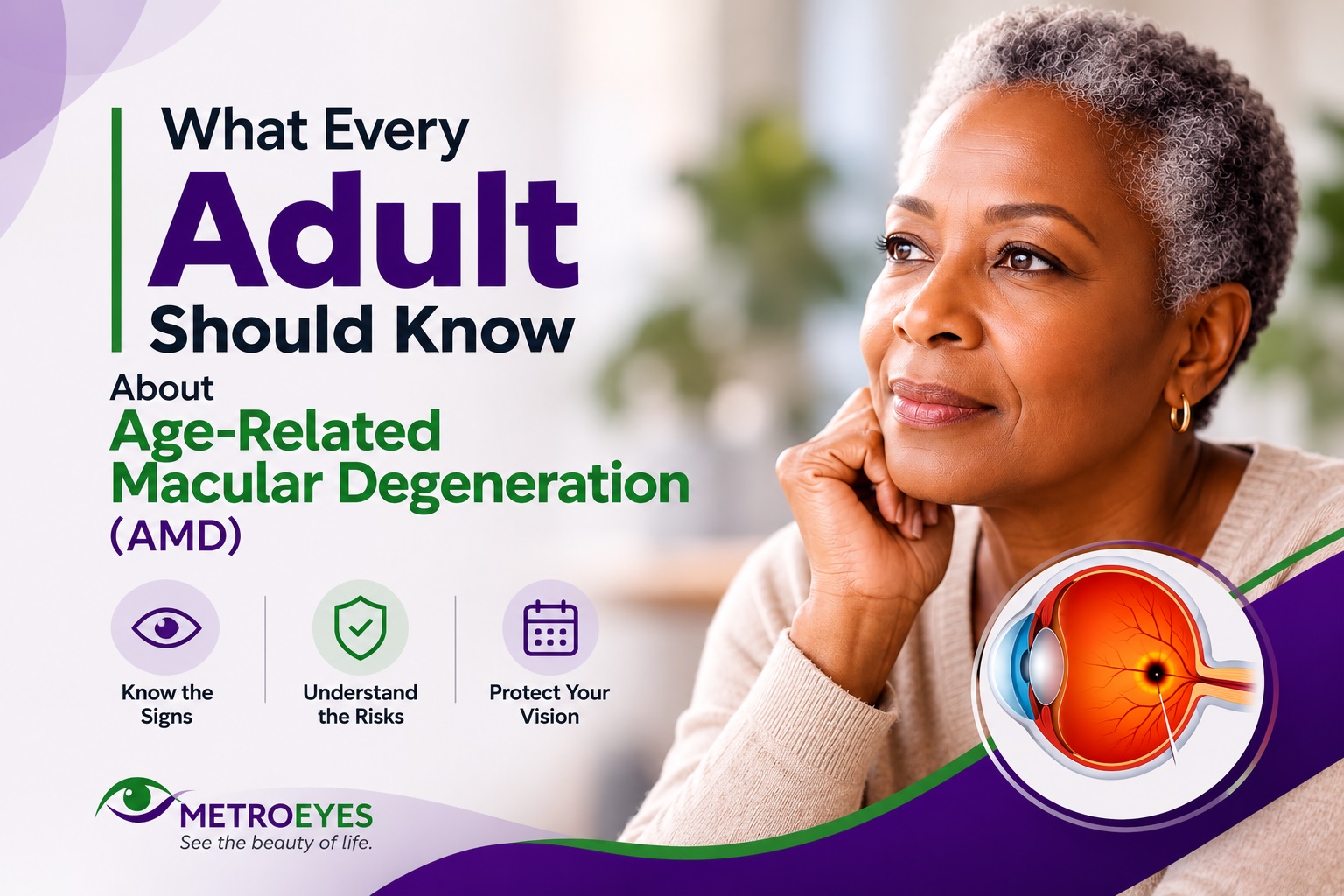
What Every Adult Should Know About Age-Related Macular Degeneration (AMD)
Seeing Clearly Goes Beyond Good Eyesight
Imagine looking at a loved one's face and noticing that the centre appears slightly blurred. Or trying to read a message on your phone and finding that the words are no longer as sharp as they used to be.
These changes may sometimes be associated with ordinary ageing, but they can also be signs of an eye condition called Age-Related Macular Degeneration (AMD).
AMD affects the macula, a specialised area at the back of the eye that provides the sharp central vision we use for reading, recognising faces, driving and seeing fine details.
The condition is more common as people get older, and importantly, early AMD may produce little or no noticeable change in vision. This is one reason routine eye examinations are so important.
What Exactly Is AMD?
Age-related Macular Degeneration is a condition in which age-related changes damage the macula.
Unlike some eye diseases, AMD mainly affects central vision rather than peripheral vision. This means a person may retain their side vision while struggling with tasks that require sharp vision directly ahead.
AMD does not necessarily mean complete blindness. However, advanced disease can significantly interfere with activities such as reading, driving and recognising people's faces.
There Are Two Main Forms of AMD
1. Dry AMD
Dry AMD is the more common form.
It develops when the macula undergoes gradual changes, including thinning of retinal tissue and the accumulation of deposits known as drusen.
For many people, the condition progresses slowly. In its early stages, there may be no obvious symptoms, making regular eye examinations particularly valuable.
2. Wet AMD
Wet AMD is less common but can cause faster and more serious changes in central vision.
It develops when abnormal blood vessels grow beneath the retina and leak fluid or blood, damaging the macula.
Unlike late dry AMD, wet AMD has established treatment options, including medicines delivered by injection into the eye. Prompt assessment is important when wet AMD is suspected.
🚨 When Should You Be Concerned?
Your eyes may give you clues that something has changed.
Watch out for:
- Straight lines suddenly appearing wavy or crooked
- Blurred vision when looking directly at an object
- Difficulty reading or seeing small details
- Difficulty recognising faces
- A blurry or dark area developing in the centre of your vision
- Changes in how bright or clear colours appear
- Increased difficulty seeing in low light
One particularly important warning sign is distortion of straight lines.
For example, if the lines of a window, door frame or writing that previously appeared straight suddenly look bent or wavy, don't assume that your glasses need changing.
Get your eyes examined.
Who Is More Likely to Develop AMD?
Age is an important risk factor, but it is not the only one.
Your risk may also be influenced by:
Family history
Having a family history of AMD can increase your likelihood of developing the condition.
Smoking
Smoking is an important modifiable risk factor associated with AMD.
Blood pressure and cardiovascular health
Conditions such as high blood pressure can contribute to your overall risk profile.
Lifestyle
Maintaining a healthy weight, being physically active and eating a balanced diet can support overall health and healthy ageing.
Having these risk factors does not mean that you will definitely develop AMD. It simply means that paying attention to your eye health becomes even more important.
Can You Reduce Your Risk?
You cannot change your age or family history, but lifestyle choices can support your eye health.
🥬 Make your diet eye-friendly
Include a variety of vegetables, particularly leafy greens, as part of a balanced diet. Fish can also be part of a healthy eating pattern.
🚭 Quit smoking
If you smoke, quitting can benefit your overall health and reduce an important modifiable risk factor for AMD.
🏃 Stay active
Regular physical activity can contribute to healthy ageing and cardiovascular health.
❤️ Monitor your blood pressure and cholesterol
If you have high blood pressure or cholesterol, work with your healthcare provider to keep them under control.
👁️ Don't wait for symptoms
Because early AMD may not cause noticeable symptoms, waiting until your vision changes before having an eye examination may mean missing an opportunity for earlier detection.
How Is AMD Detected?
An eye-care professional can examine the back of your eye during a comprehensive dilated eye examination.
Depending on what is found, an eye care professional may recommend additional tests. An Optical Coherence Tomography (OCT) scan, for example, can provide detailed images of the retina and help the eye-care professional assess changes within the macula.
For people with AMD, an Amsler grid may also be recommended for monitoring changes in central vision between appointments.
What Happens If AMD Is Diagnosed?
Treatment depends on the type and stage of AMD.
Some people with early AMD may require regular monitoring and lifestyle modifications.
For people with intermediate AMD, an eye-care professional may recommend specific dietary changes or nutritional supplements to help support eye health.
The AREDS/AREDS2 studies found that particular vitamin and mineral formulations can slow progression in certain stages of AMD.
For wet AMD, treatment may include anti-VEGF medicines, which can help reduce abnormal blood vessel growth and leakage. Other treatments may be appropriate in selected cases.
Never begin an eye supplement simply because you suspect you have AMD. The appropriate formulation depends on your diagnosis and stage of disease.
Don't Ignore Changes in Your Central Vision
One of the most important things to remember about AMD is that your vision can change before you realise there is a problem.
If you are over 50, have a family history of AMD, smoke, or have other risk factors, discuss your eye examination needs with an eye-care professional.
And if you experience a new or sudden change in central vision, particularly distortion or a dark/blurry area, seek professional eye care promptly. Wet AMD can progress quickly, and early treatment can help protect vision.
Healthy Ageing Should Include Healthy Eyes
Getting older is inevitable. Significant vision loss does not have to be something you accept.
Your eyes deserve the same attention you give the rest of your health. Eat well, stay active, avoid smoking, manage your general health and, most importantly, have your eyes examined regularly.
See the signs. Protect your sight. Keep seeing the beauty of life.
At Metro Eyes, we are committed to promoting early detection, quality eye care and better vision through every stage of life.
Book a comprehensive eye examination and make your eye health part of your healthy-ageing routine.
You are a few steps away from a clearer future